
WELCOME
Thank you for visiting my teaching portfolio. This page highlights my teaching philosophy, instructional practices, technology integration, professional resources, and sample lesson plans developed through my TESOL Certificate Program and teaching experiences in English language learning and higher education settings.
My teaching approach emphasizes learner-centered instruction, meaningful communication, intercultural competence, and practical language use. I strive to create engaging learning environments where students develop confidence, critical thinking skills, and the ability to use English in authentic contexts.
Teaching Philosophy

My commitment to education began during an internship with EducationUSA in Kazakhstan in 2017, where I worked with high school students preparing personal statements, university applications, and TOEFL examinations. Through this experience, I saw how language skills can open doors to educational opportunities, international exchange, and personal growth. What motivates me most as an educator is helping students take meaningful steps toward their goals, whether that means gaining confidence in communication, preparing for higher education, or discovering opportunities that once felt out of reach. I view teaching as a process of supporting learners as they develop the skills, confidence, and agency to pursue their aspirations rather than a top-down transmission of knowledge from teacher to student.
I believe language learning is both deeply human and deeply relational. My understanding of language acquisition is shaped by interactionist theory and Krashen’s emphasis on comprehensible input, but my classroom experience has most strongly affirmed a constructivist approach: students learn best when they actively make meaning together. For this reason, I prioritize dialogue, collaboration, and authentic communication. I am also increasingly drawn to connectivism, particularly the ways digital tools and global networks can extend language learning beyond the walls of the classroom and connect learners with authentic audiences and resources.
I take an eclectic approach to methodology. While Communicative Language Teaching and cooperative learning form the foundation of my instruction, I selectively draw from methods such as Total Physical Response, audiolingual practice, content-based instruction, and task-based learning depending on my students’ needs, proficiency levels, and goals. Guided by Universal Design for Learning, I intentionally vary how students engage with material and demonstrate learning. Influenced by Yosso’s community cultural wealth framework, I work to recognize and build upon students’ existing linguistic, cultural, and experiential strengths rather than viewing differences as deficits. I believe meaningful learning occurs when students can connect new knowledge to their own experiences and identities.
I see the teacher-student relationship as collaborative and growth-oriented. I set clear expectations while inviting students into goal-setting, self-assessment, and structured reflection so they can take ownership of their progress. I strive to create a classroom where risk-taking feels safe and mistakes are treated as essential components of learning rather than failures to be avoided. Because language learning requires vulnerability, I believe students learn best when they feel respected, supported, and empowered to participate.
Just as I ask my students to reflect on their learning, I place the same expectation on myself as an educator. Teaching is an ongoing process of learning, adaptation, and refinement. Through continuous reflection, professional development, and engagement with new ideas and technologies, I seek to create learning experiences that help students communicate effectively, think critically, and engage thoughtfully with the world around them.
Technology Integration

1
Padlet: Collaborative Learning
Examples of Use
-
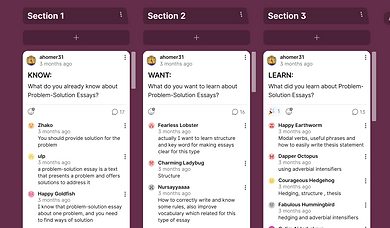
KWL activities
-
Brainstorming sessions
-
Discussion boards
-
Reflection activities
-
Exit tickets
Benefits
-
Encourages participation from all students
-
Creates a visual record of learning
-
Supports collaboration and reflection
-
Facilitates formative assessment
2
Canva: Creative Communication
Examples of Use
-
Academic posters
-
Infographics
-
Presentation slides
-
Digital storytelling projects
-
Visual summaries
Benefits
-
Supports multimodal communication
-
Encourages creativity and audience awareness
-
Develops digital literacy skills
-
Produces professional-quality student projects
3
Research and Citation Resources
Topics Taught
-
APA Citation Style
-
Academic Integrity
-
Source Evaluation
-
Reference Lists
-
In-Text Citations
Resources Introduced
-
Purdue OWL
-
Google Scholar
-
Zotero
-
Citation Generators
-
Students learn how to cite sources correctly and why responsible source use is important for academic and professional communication.
Instructional Resources

Professional Development and Teaching Methodology
British Council TeachingEnglish
Website: https://www.teachingenglish.org.uk
American English
Website: https://americanenglish.state.gov
Edutopia
Website: https://www.edutopia.org
These resources provide a strong foundation for my professional growth as an educator. The British Council's TeachingEnglish platform and American English offer free lesson plans, classroom activities, teacher training materials, and practical guidance for language instruction. Edutopia complements these resources by providing research-informed articles on student engagement, assessment, classroom culture, and instructional design. Together, these websites help me stay informed about effective teaching practices while providing adaptable materials that can be incorporated directly into the classroom.
Authentic and Adapted Reading and Listening Materials
Breaking News English
Website: https://breakingnewsenglish.com
TED-Ed
Website: https://ed.ted.com
Happiful
Website: https://happiful.com/
Authentic materials play an important role in helping students connect language learning to real-world communication. Breaking News English provides current events articles and listening activities that are adapted across multiple proficiency levels, making it easy to differentiate instruction. TED-Ed offers engaging videos that expose students to diverse speakers, ideas, and perspectives while promoting critical thinking and discussion. Happiful is a wellness magazine with authentic, contemporary materials that students can often relate to. I frequently use these resources to develop reading, listening, vocabulary, and presentation skills while encouraging students to engage with meaningful content.
Academic Writing and Research Skills
Purdue Online Writing Lab (OWL)
Website: https://owl.purdue.edu
Purdue OWL is one of my primary resources for teaching academic writing and citation practices. The website provides clear explanations of APA formatting, citation conventions, research writing, and academic integrity. I often use Purdue OWL when teaching students how to incorporate sources into essays and presentations, evaluate information, and create accurate reference lists. Its accessible examples and comprehensive guides support both classroom instruction and independent student learning.
Interactive Learning and Student Engagement
Padlet
Website: https://padlet.com
Mentimeter
Website: https://www.mentimeter.com
Kahoot!
Website: https://kahoot.com
Interactive technology tools can increase participation, collaboration, and formative assessment opportunities. I use Padlet for brainstorming activities, collaborative discussions, KWL charts, and reflection exercises. Mentimeter allows students to contribute ideas anonymously through polls, word clouds, and live feedback activities, encouraging participation from all learners. Kahoot! provides a fun and engaging way to review vocabulary, grammar, and lesson content through game-based learning. Together, these tools help create an active classroom environment while providing valuable insight into student understanding.
Sample Lesson Plans
The following lesson plans were developed and used during my teaching practicum at Maqsut Narikbaev University in Astana, Kazakhstan. They were implemented in a higher education context for B2 level. Each lesson plan demonstrates my approach to communicative language teaching, scaffolding, performance-based assessment, and learner-centered instruction. They were integrated into a syllabus to prepare for essay exams and public speaking assignments.

Lesson Materials
Storytelling for TED Talks
Students explore storytelling structures commonly used in TED Talks through vocabulary development, listening activities, guided analysis, and speaking practice.
Voice and Power: Pronunciation for Public Speaking
Students explore sentence stress, intonation, rhythm, and emotional expression through analysis and imitation of effective public speakers.
Hedging Practice: Hot Takes vs. Expert Takes
Students identify differences in register by using hedging techniques in a mock talk show format.
Practicum in Astana, Kazakhstan
TESOL Practicum
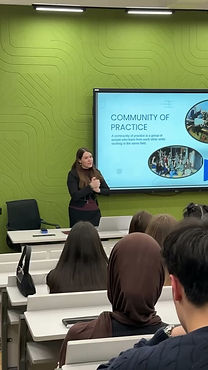
As part of my TESOL Certificate Program, I completed a teaching practicum at Maqsut Narikbayev University in Astana, Kazakhstan. During this experience, I co-taught English language classes with an experienced instructor, contributing to lesson planning, classroom activities, and student engagement. Working with university students at the B2 level, I gained practical experience implementing communicative language teaching techniques, integrating educational technology, and supporting the development of speaking, listening, reading, and writing skills. I also had the opportunity to lead a workshop on professional skill sets for 90 first-year students in the School of Linguistics, which focus on career tracks for translation, foreign language teaching, and research.
This practicum was conducted jointly with the practicum requirement for my M.A. in International Education Management at the Middlebury Institute of International Studies. In addition to classroom teaching, I designed and facilitated an intercultural learning curriculum for U.S. university students studying Russian in Kazakhstan through the Middlebury School Abroad program. This project focused on intercultural competence, reflection, conflict transformation, and student development abroad, allowing me to integrate language education with broader goals in international and intercultural learning.
No Collections Here
Sort your projects into collections. Click on "Manage Collections" to get started